Chicago, February 12, 1979
Muhammad Ali: The Greatest
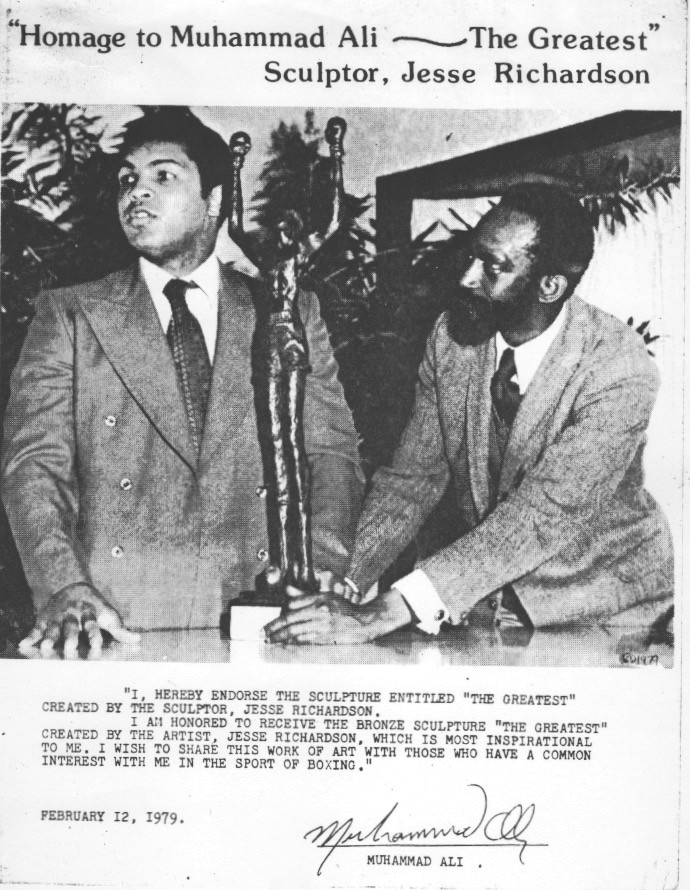
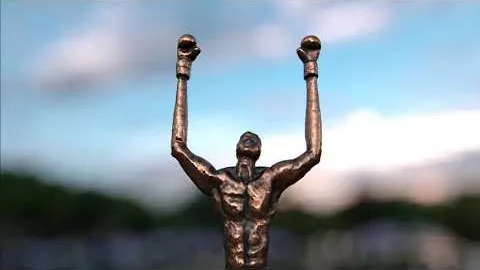
On February 12, 1979, Jesse Richardson presented Muhammad Ali with Homage to Muhammad Ali, The Greatest, a bronze of the champion in boxing trunks with both arms raised.
The presentation
It took place at Ali’s mansion on South Woodlawn Avenue, on Chicago’s South Side. Ali set the sculpture on the white grand piano in his living room. Chicago magazine’s “Upfront” column described the afternoon: Ali told his wife Veronica to pick it up, because “It’s heavier than you are,” then sat down at the piano and played Boogie Woogie. The column said the piece “looks like Giacometti out of Modigliani.” An Associated Press photograph by Larry Stoddard records the same afternoon.
The guests included Harold Haydon, art critic of the Chicago Sun-Times, and Margaret Burroughs, founder of the DuSable Museum of African American History.
Ali’s endorsement
Ali signed a typed statement the same day:
“I, hereby endorse the sculpture entitled ‘The Greatest’ created by the sculptor, Jesse Richardson. I am honored to receive the bronze sculpture ‘The Greatest’ created by the artist, Jesse Richardson, which is most inspirational to me. I wish to share this work of art with those who have a common interest with me in the sport of boxing.”
Muhammad Ali, February 12, 1979
The 1987 catalogue records Ali’s own reaction: “This will knock them out.”
The sculpture
Bronze, about 30 inches (76 cm) high without its base, cast by the lost-wax method. Chicago magazine gave the height as 31 inches and reported that it would be issued in an edition of 50, at $5,000 each. A cast numbered 4/40 was offered at auction in New York in 2011 as Muhammad Ali, The Champ.
A critic’s view
“The immediate impression of power, strength and victory that is conveyed by this sculpture gives way to an appreciation of the delicate interplay of grace, balance and even humility that lies within this glorious testament to a great man.”
Ronald Yoes
Ali also appears among the collectors and commissions in Jesse’s 1987 catalogue.
The sculpture on film
The video plays from YouTube. It only loads when you press play.